






Automated Funnel Case
TABLE OF CONTENTS
Profit.Store

389
Online educational projects are actively growing, but along with their development, the complexity of management also increases. Advertising, webinars, communication with the audience, sales, and issuing access to educational materials—all this requires coordinated work. Therefore, in the modern EdTech environment, success depends not only on the quality of content but also on the depth of its digitalization. The market requires the abandonment of manual management in favor of systems that operate 24/7, minimizing the human factor. If the business doesn't integrate these processes into a single system, it risks losing customers and money before they even make a payment.
Pavlo Kovtunenko, expert #1 according to Alibaba.com and official service partner in Ukraine, approached us with this task.
Request
The main request was clear and pragmatic: automate the entire customer journey from the first contact with advertising to the moment of payment for the product, minimizing losses at each stage.
The goal was not to simply configure individual tools but to build a system that works stably, predictably, and scales without constant team involvement.
Audit of problems before automation
Before the project started, the business faced difficulties typical of the education sector:
- Chaos in data. The business utilized numerous unconnected services. Customer information was stored in the CRM, Google Sheets, and "in the heads" of the team.
- Lack of automated communications. Communication with the audience was not systematic, resulting in lost leads.
- "Blind" marketing. The project used a large number of traffic channels, but without end-to-end analytics, it was impossible to determine which ones were profitable and which were losing money.
- Losses at the payment stage. Users could click the "Buy" button, but not complete the transaction. As the data of such users was not always recorded, managers could not close the deal.
Solution architecture—technology stack
To build a system, we chose the SendPulse platform and external automation tools: Webinar Stars, WayForPay, WordPress, Profit.Store.BI, Node-Red at Looker Studio.
To build end-to-end analytics systems, it is necessary to control all stages of data recording and, of course, to ensure that this data is still correct. Then, you can build working dashboards, on the basis of which it is possible to make the right management decisions. Therefore, we were forced to expand our product line to automation services in order to control the entire stage of data accumulation and recording.
This complex ecosystem combines the following components:
- CRM—for storing contacts and deals;
- LMS—for organizing the learning process;
- a webinar room for holding online events;
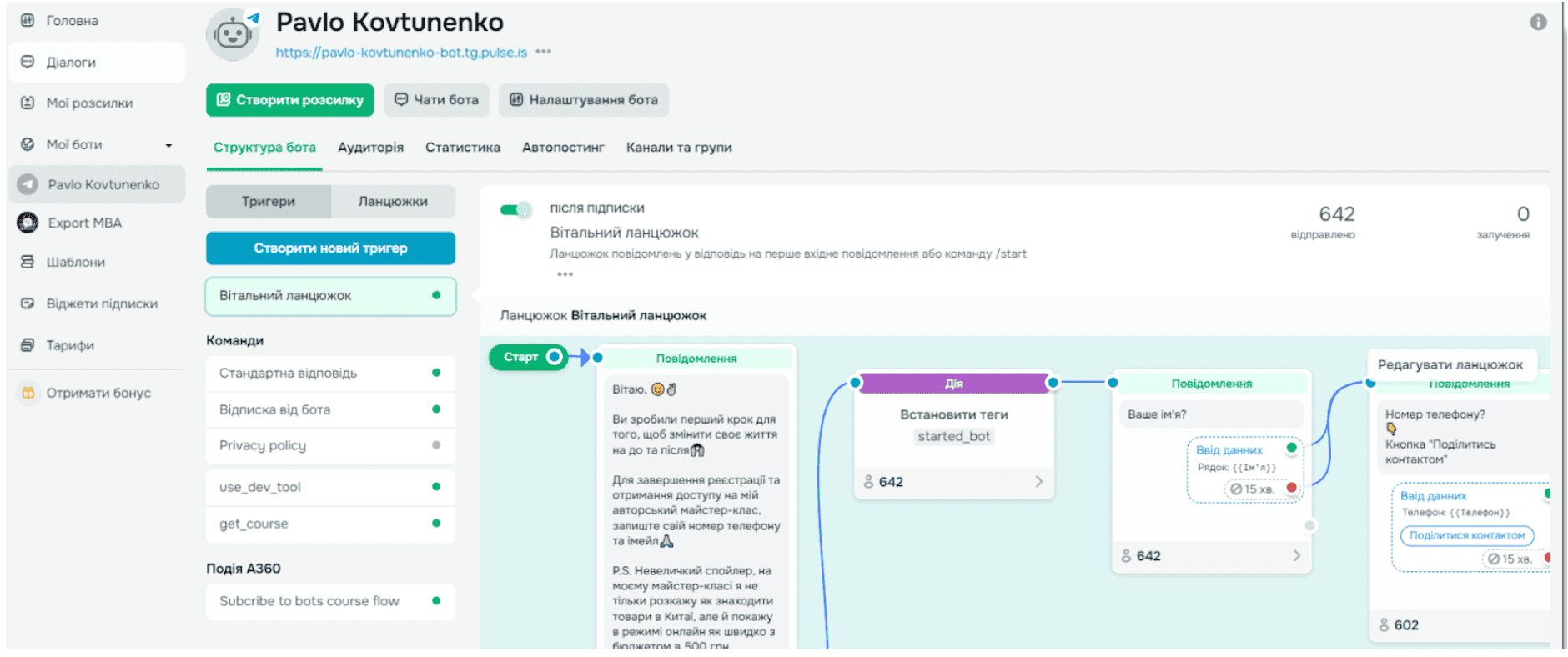
- chatbots in Telegram and Viber—for automated communication;
- payment system—for accepting and processing payments;
- web analytics—to track user behavior;
- marketing analytics—to assess the effectiveness of advertising;
- Node-RED automation system.
Now let's look at each component of the autoresponder in more detail.
1. Web analytics (Google Analytics 4)
To make Facebook and Google advertising cabinets work more efficiently, we have set up:
1. Web analytics via GA4 and Hotjar
Setting up web analytics consisted of three stages:
- We have introduced uniform rules for marking traffic with UTM tags. Now, all traffic began to reflect which advertising activity it came from.
- We set up conversions (key events) to see which traffic from which advertising activities achieves which conversions. This is a quick analysis of effectiveness at the web analytics level.
- Configured Hotjar to track user behavioral factors on website pages and landing pages with a convenient heat map based on video session recordings for each visit.
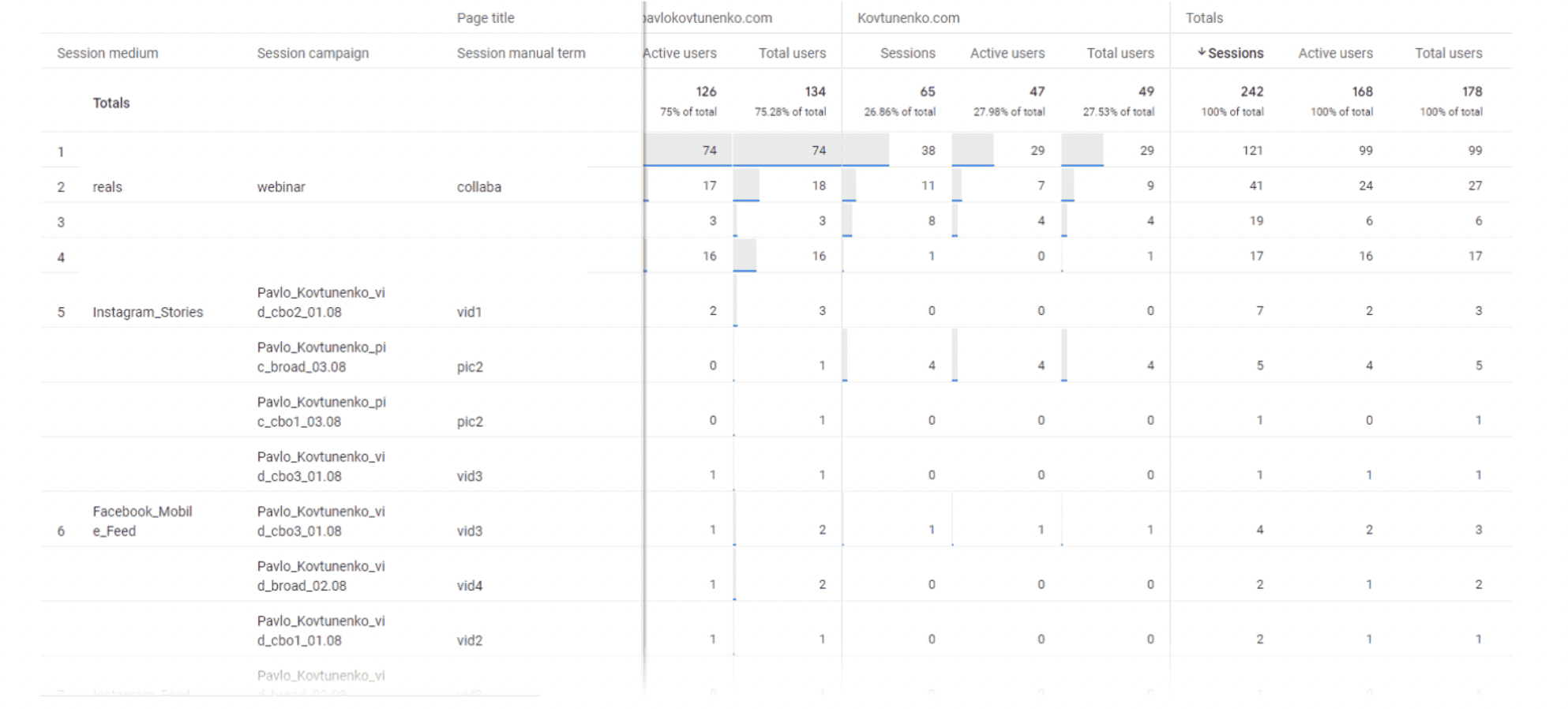
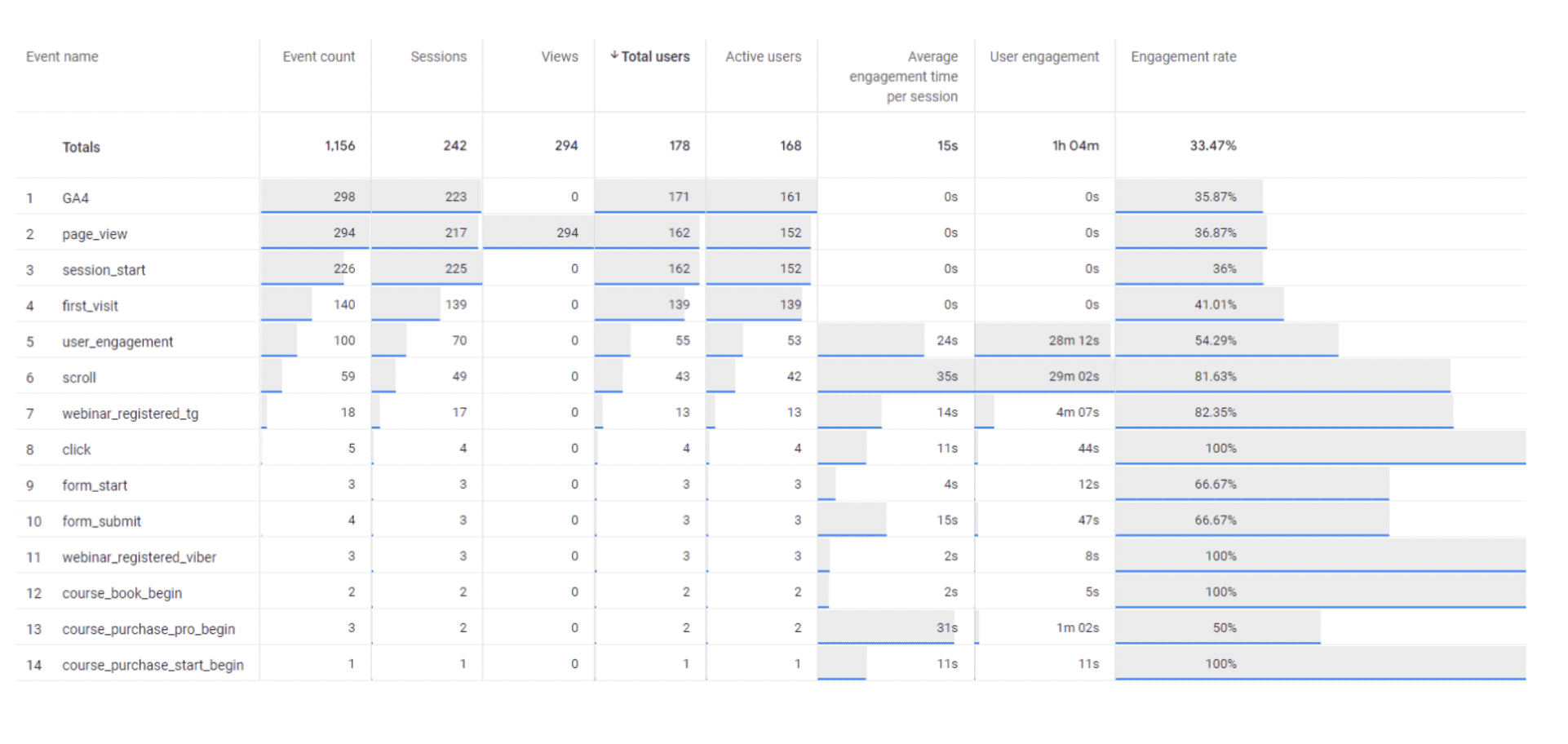
As a company with many years of experience in analytics, we use not standard, but custom reports adapted to our needs. We track the entire structure of UTM tags coming to the landing page, record active sessions, and the number of visitors. The main task is to avoid losing the parameters used to further process user data. If the UTM tag is not transmitted due to ad blockers, we use technical workarounds: we leverage cookies to accurately determine traffic channels. That is why high-quality web analytics is necessary. It becomes the foundation for marketing analytics and allows you to build an effective end-to-end system on the basis of which the business makes decisions about funnel optimization.
2. Website with widget
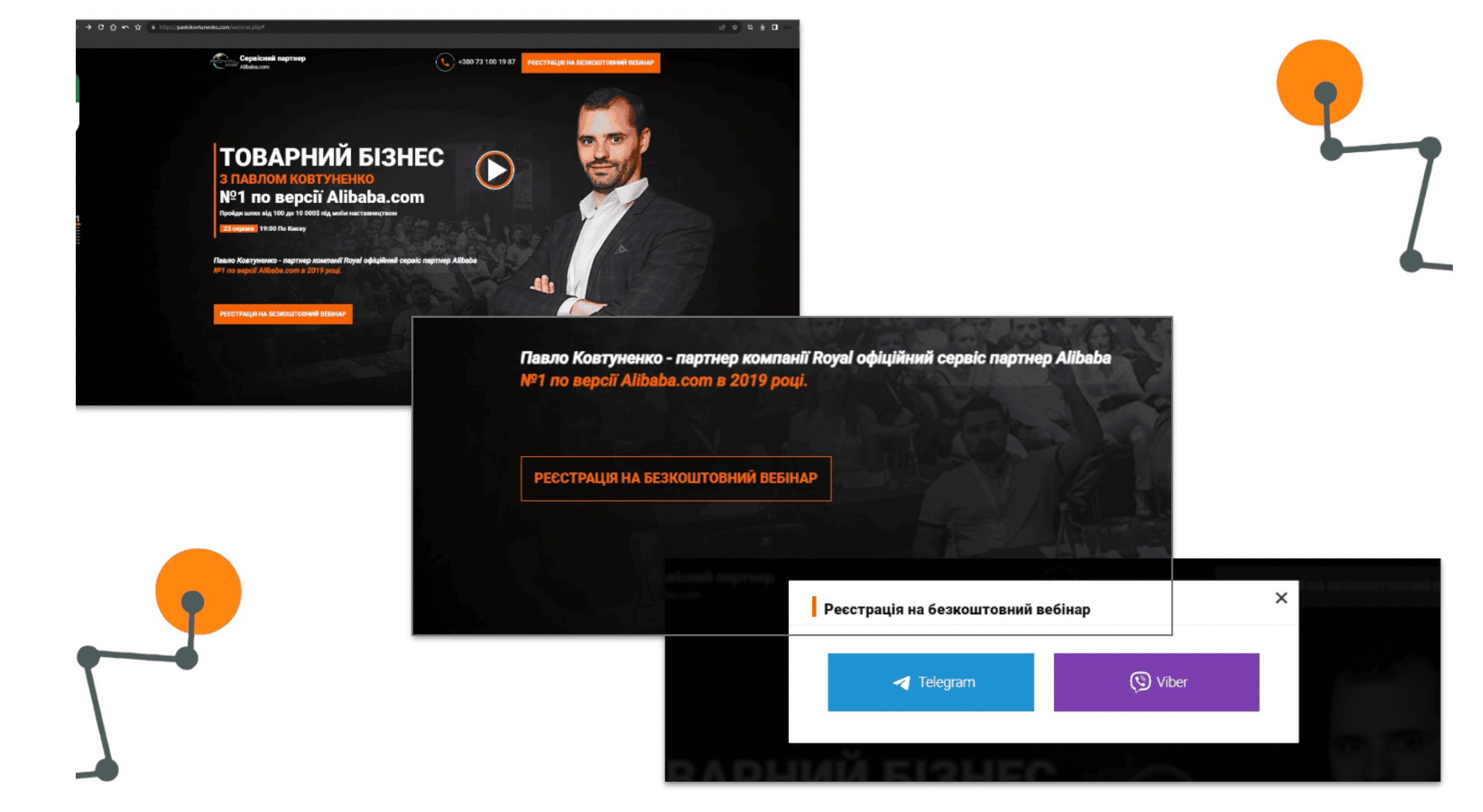
Traffic is directed to a landing page with a form to jump to the chatbot funnel. Users can choose a convenient messenger, such as Viber or Telegram.
3. Chatbots (Telegram and Viber)
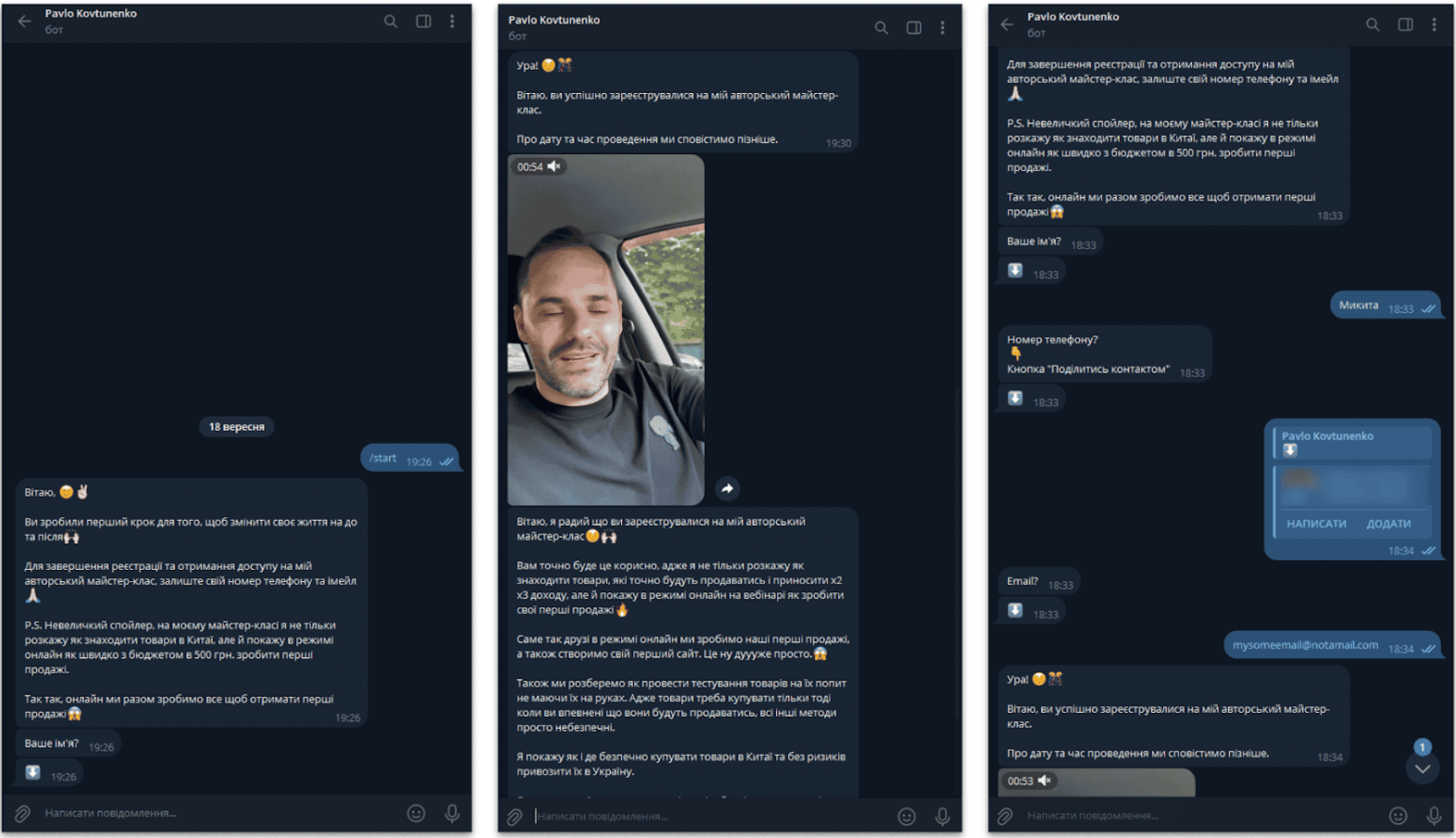
Communication was moved to messengers due to the high open rate. We implemented complex interaction scenarios: pre-webinar reminders, during-air triggers, and post-webinar warm-up. A key technical feature was the bots' ability to capture and transmit user UTM tags and cookies.
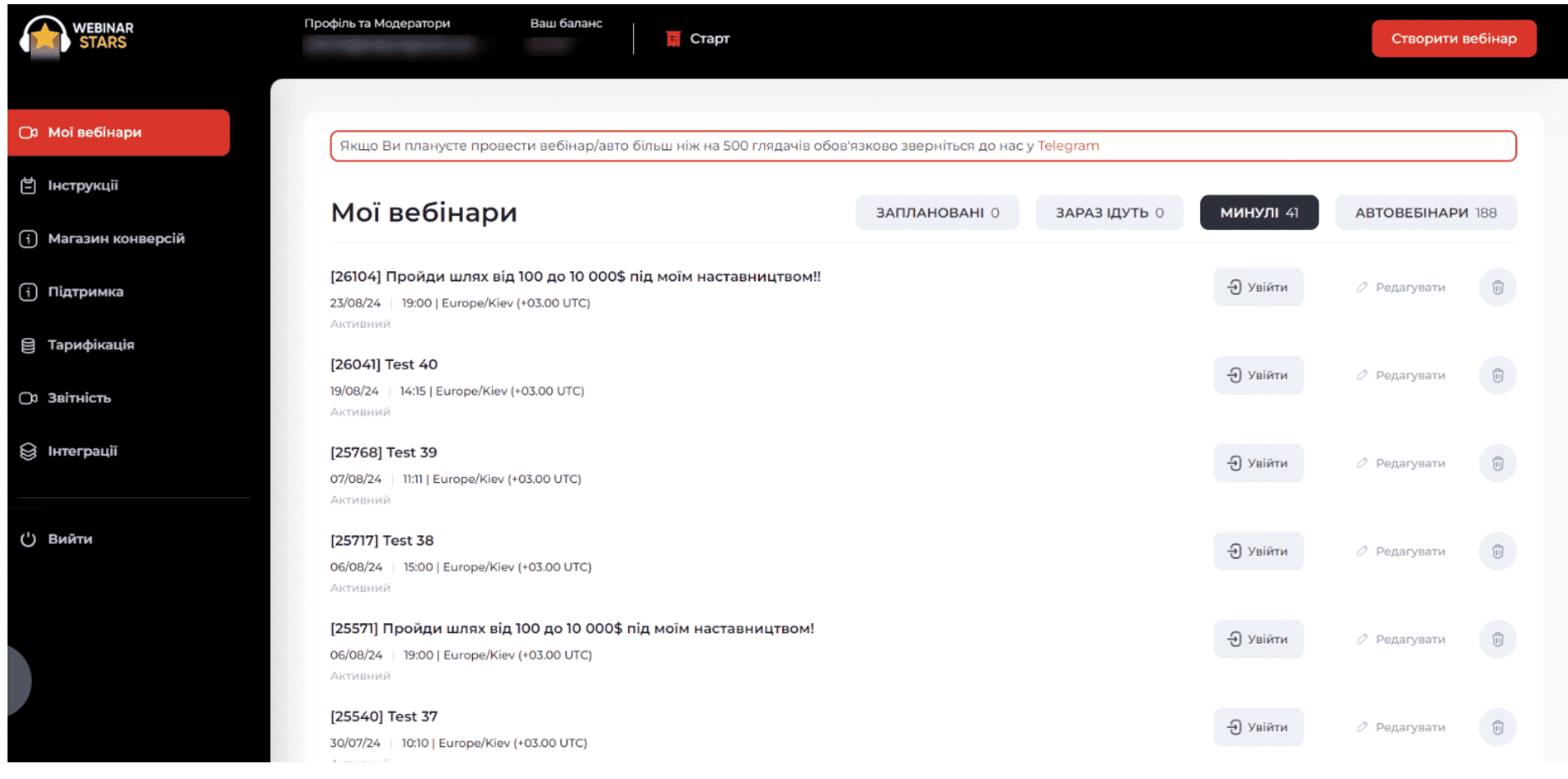
4. Webinar Room (Webinar Stars)
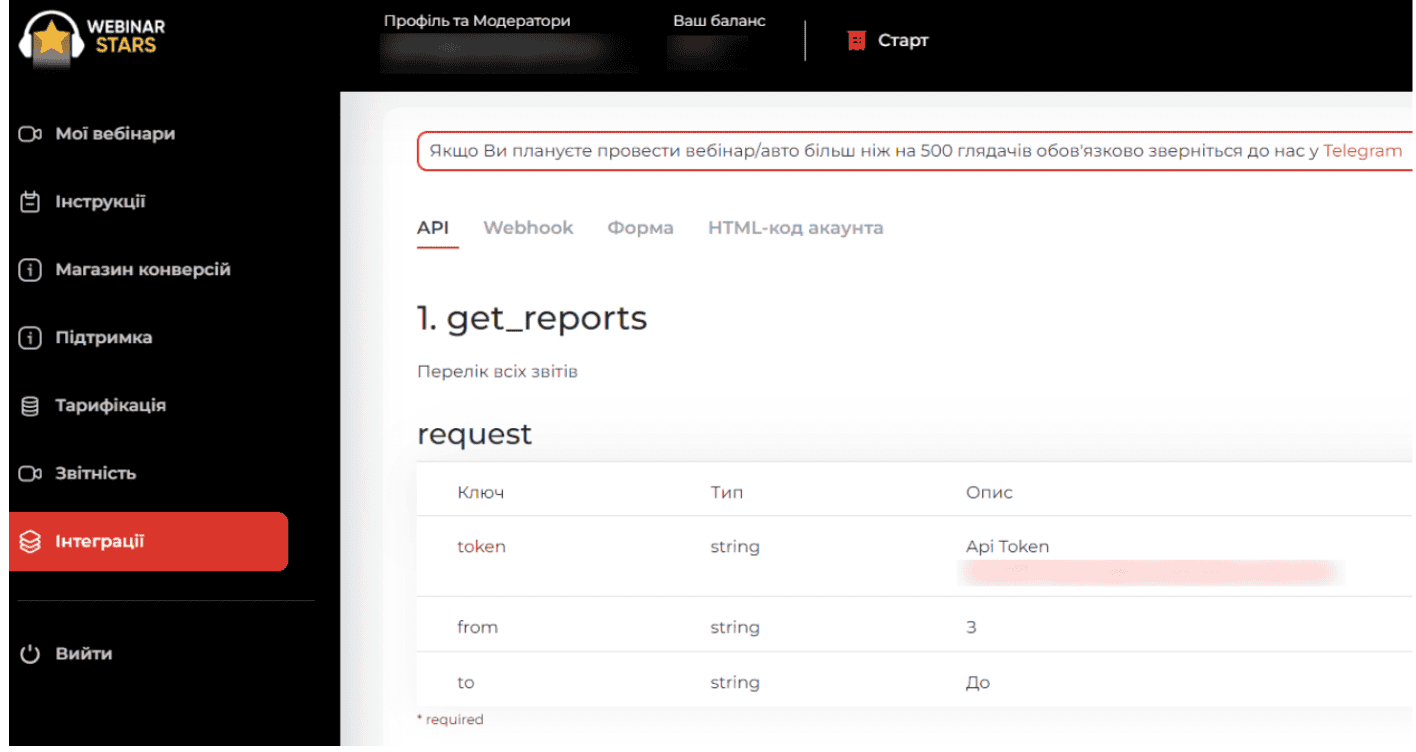
It was selected for opportunities integration through API. The service allows you to transfer data about viewer behavior to CRM, without losing important technical parameters, such as webinar ID and traffic parameters.
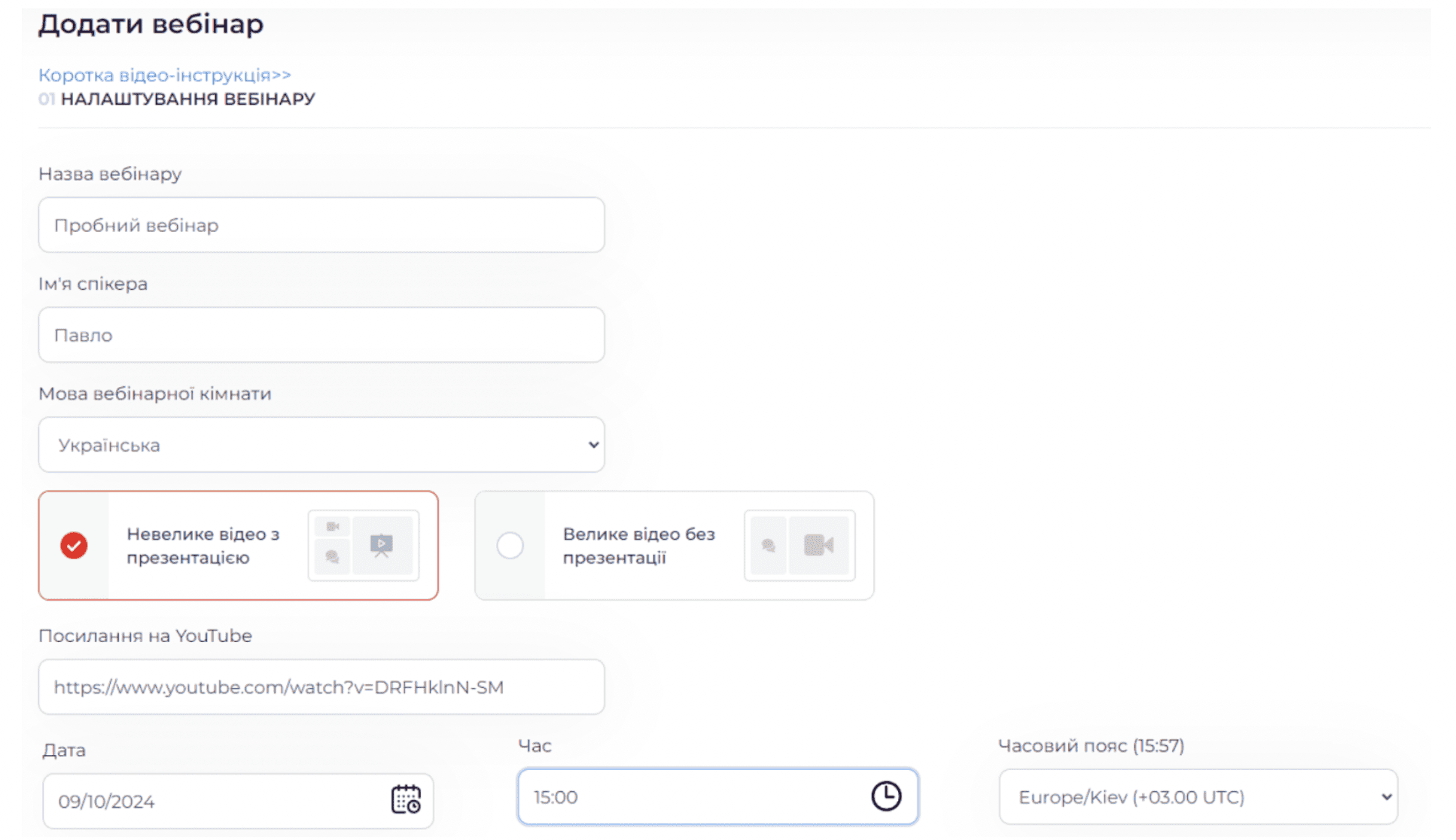
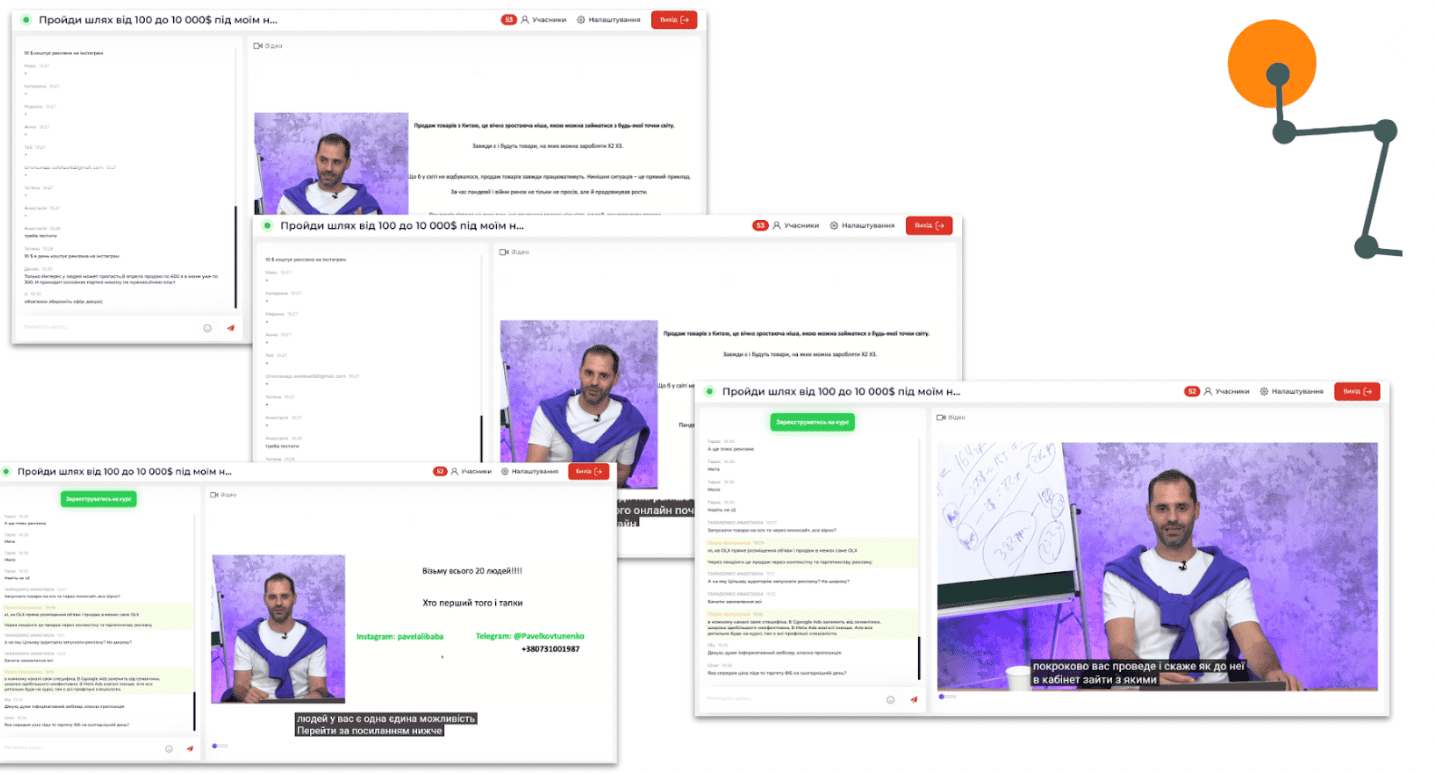
A critical step was implementing the transfer of UTM tags and contact data from the chatbot directly to the webinar room. This ensured seamless integration and eliminated an unnecessary step—the authorization page.
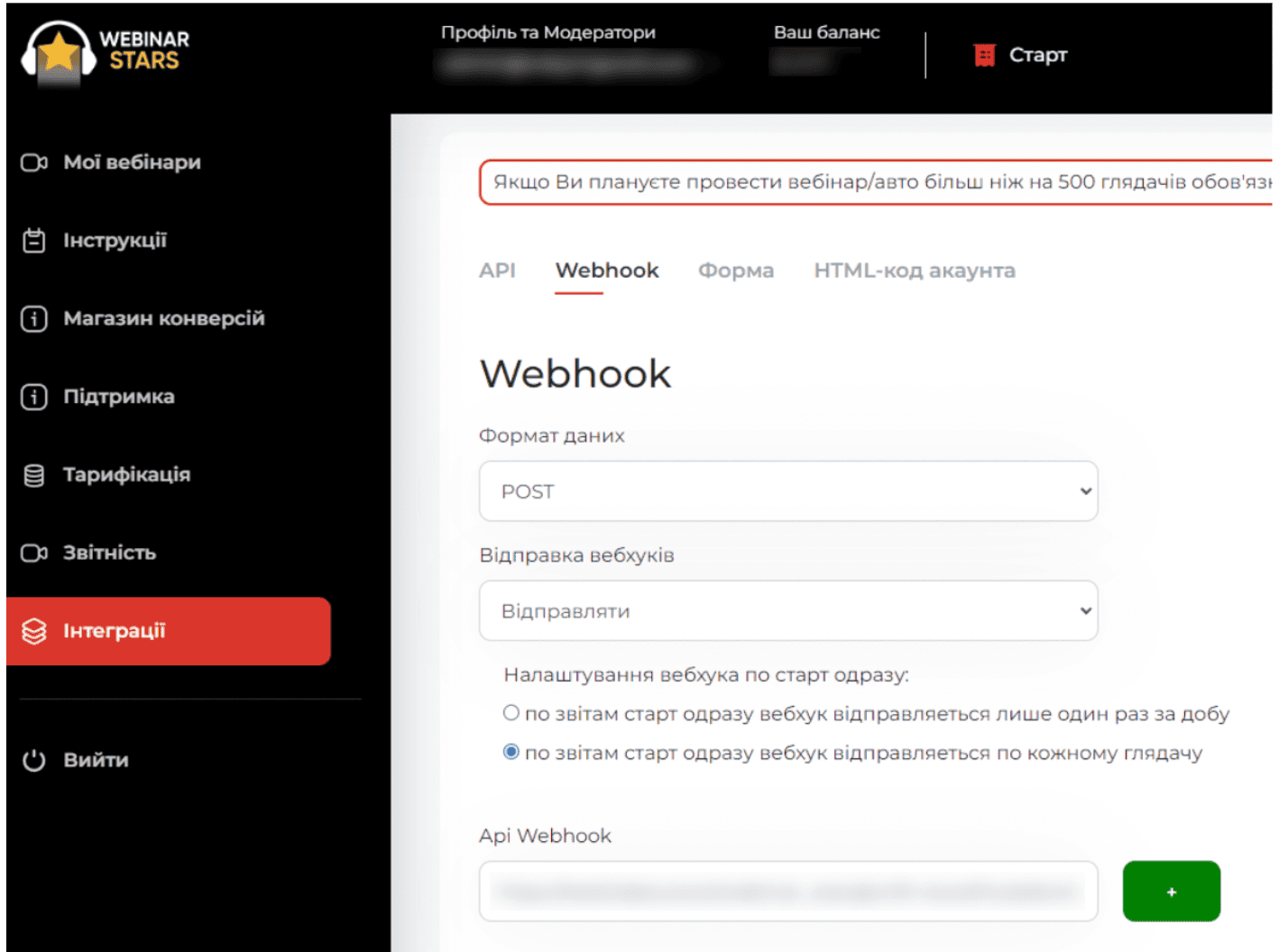
This allowed us to direct the audience from a chatbot directly to the webinar. In the sales block, we set up buttons to go to the landing page with an offer, ensuring end-to-end transmission of UTM parameters.
5. CRM and communications (SendPulse)
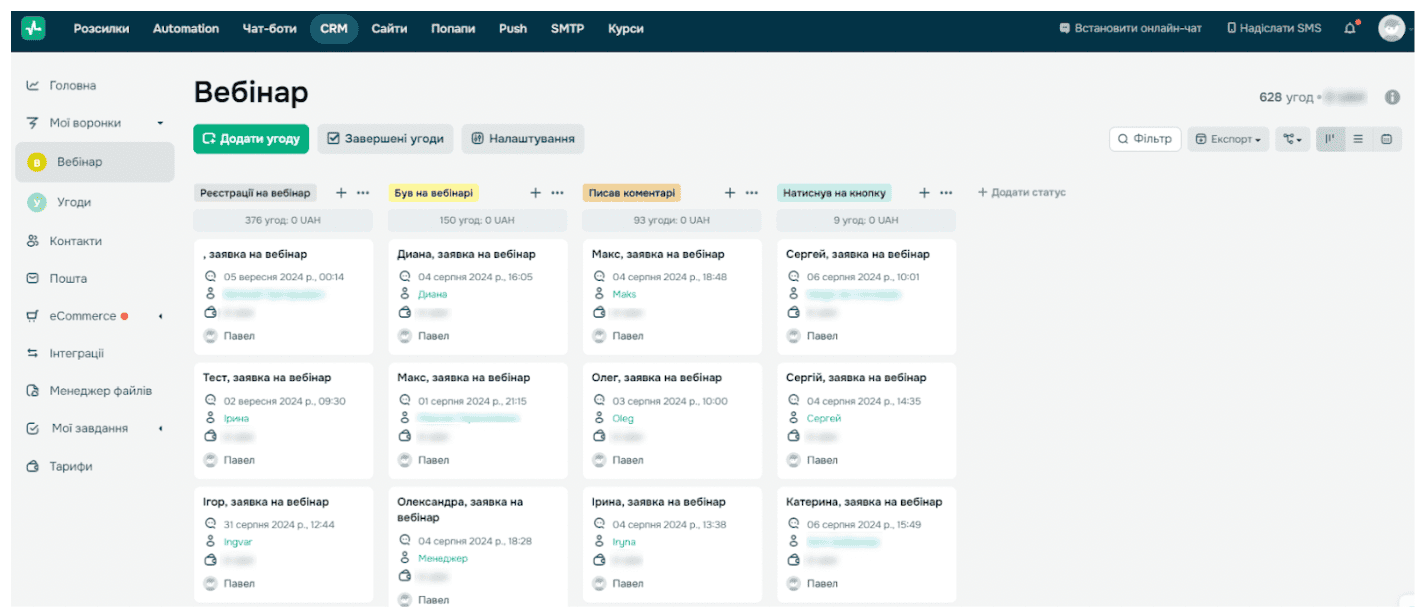
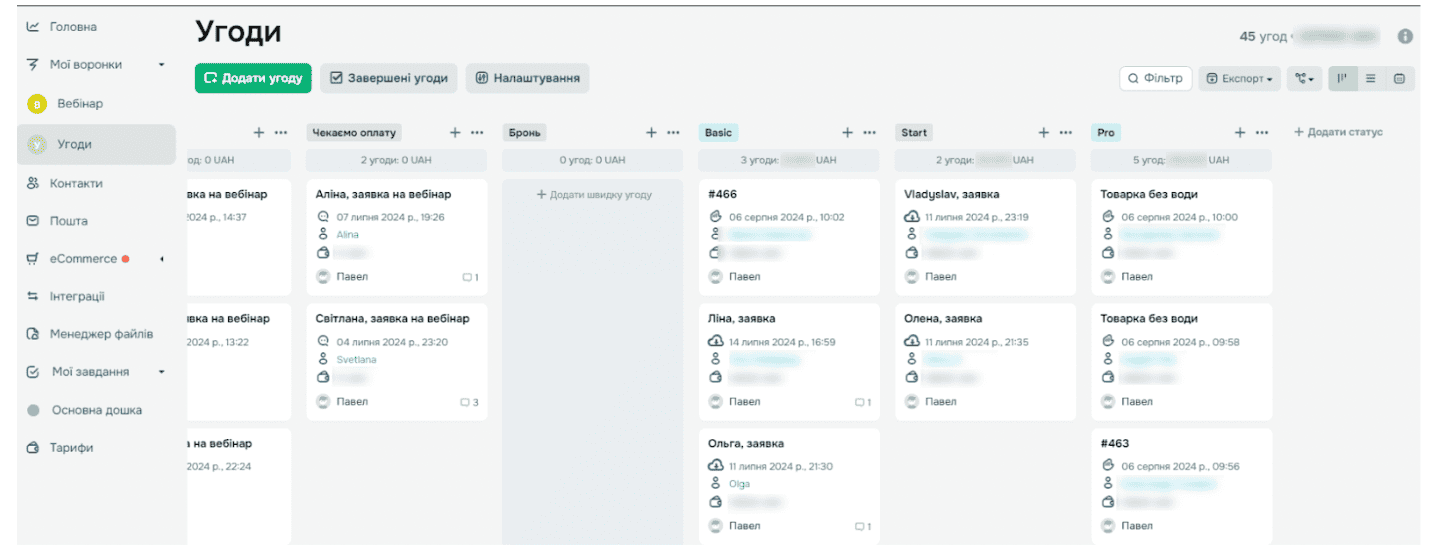
The SendPulse CRM platform has become the center of the ecosystem. It has two main funnels:
-
Webinar funnel. All registrations are recorded here, including participants' presence in the webinar, their activity in the chat (comments are automatically saved in the client's card), and clicks on purchase buttons.
-
The deal funnel. There are customers who elected specific training packages and made a reservation (Start, Basic, Pro). The transition between funnels occurs automatically, which eliminates the possibility of duplicate applications.
6. Payment system (WayForPay)
WayForPay integration via Webhooks with CRM allowed us to implement such scenarios:
1. Instant access. After a successful payment via Apple Pay or Google Pay, WayForPay sends a signal to Node-RED. The system instantly creates an account in SendPulse LMS and sends a message to the student: "Congratulations! Your training is now available".
2. Return of "Abandoned Carts". If the customer has switched to a payment gateway but has not entered card details, after 30-60 minutes, they receive an automatic reminder in the bot with an offer of help or a postponement.
3. Fiscalization. Each payment automatically generates a fiscal check (through integration with Checkbox), which completely legalizes the process without the involvement of an accountant.
7. Website with widget
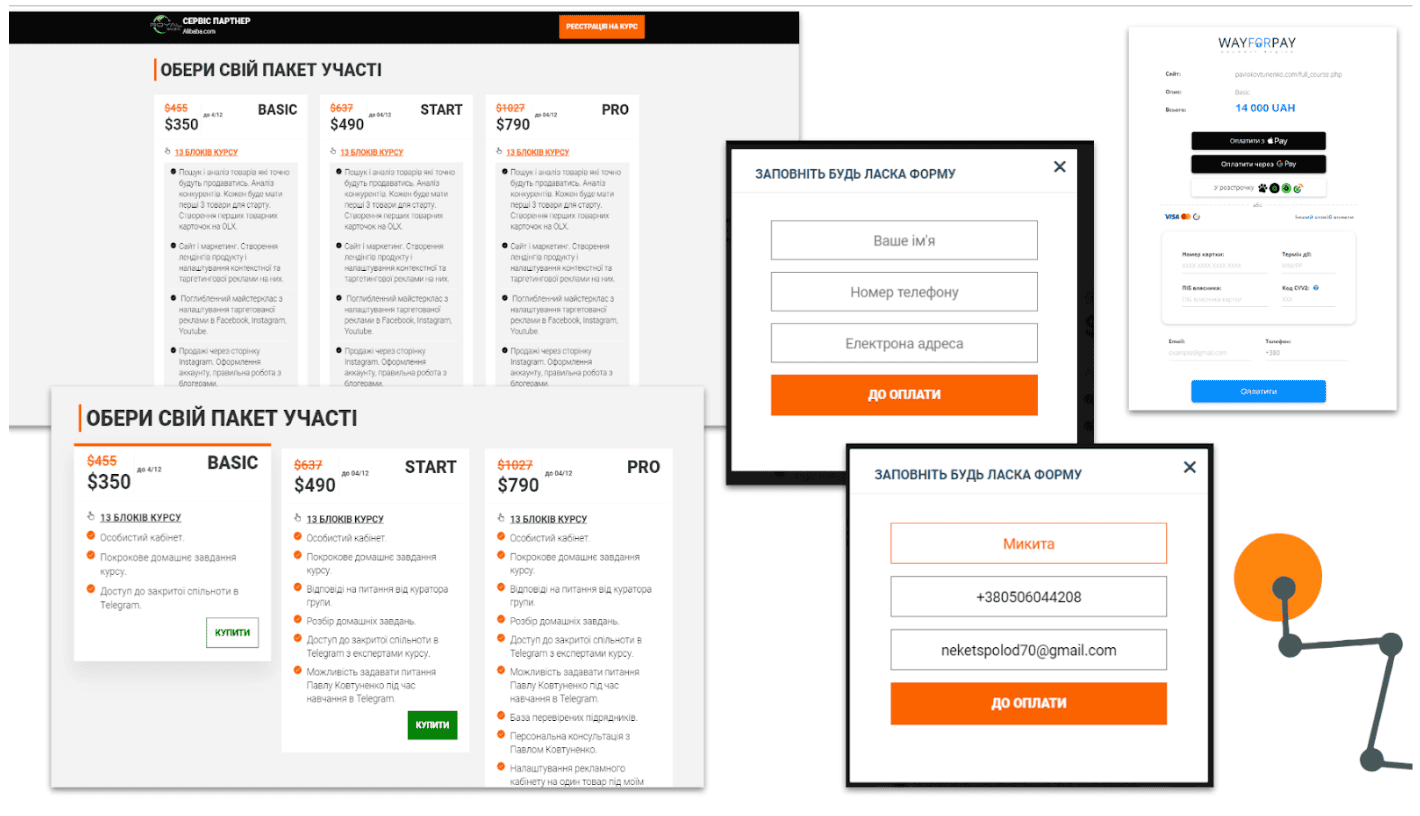
A rate selection widget was developed and implemented on the website, which allows the user to quickly select a participation package, fill in contact details, and proceed to payment in a few clicks. The widget is integrated with the payment system and CRM, which ensures correct fixation of the selected rate and automatic data transfer for further processing in the auto-funnel.
When choosing a package, the user is redirected to the acquiring website for payment, but only if there is data about this user in the system. If there is no data, a form appears for entering contact details. This significantly increases the possibilities of closing the deal if the user did not pay for some reason, because there is data about everyone who clicked the button and did not pay, which the sales manager can work with.
8. Learning platform (LMS SendPulse)
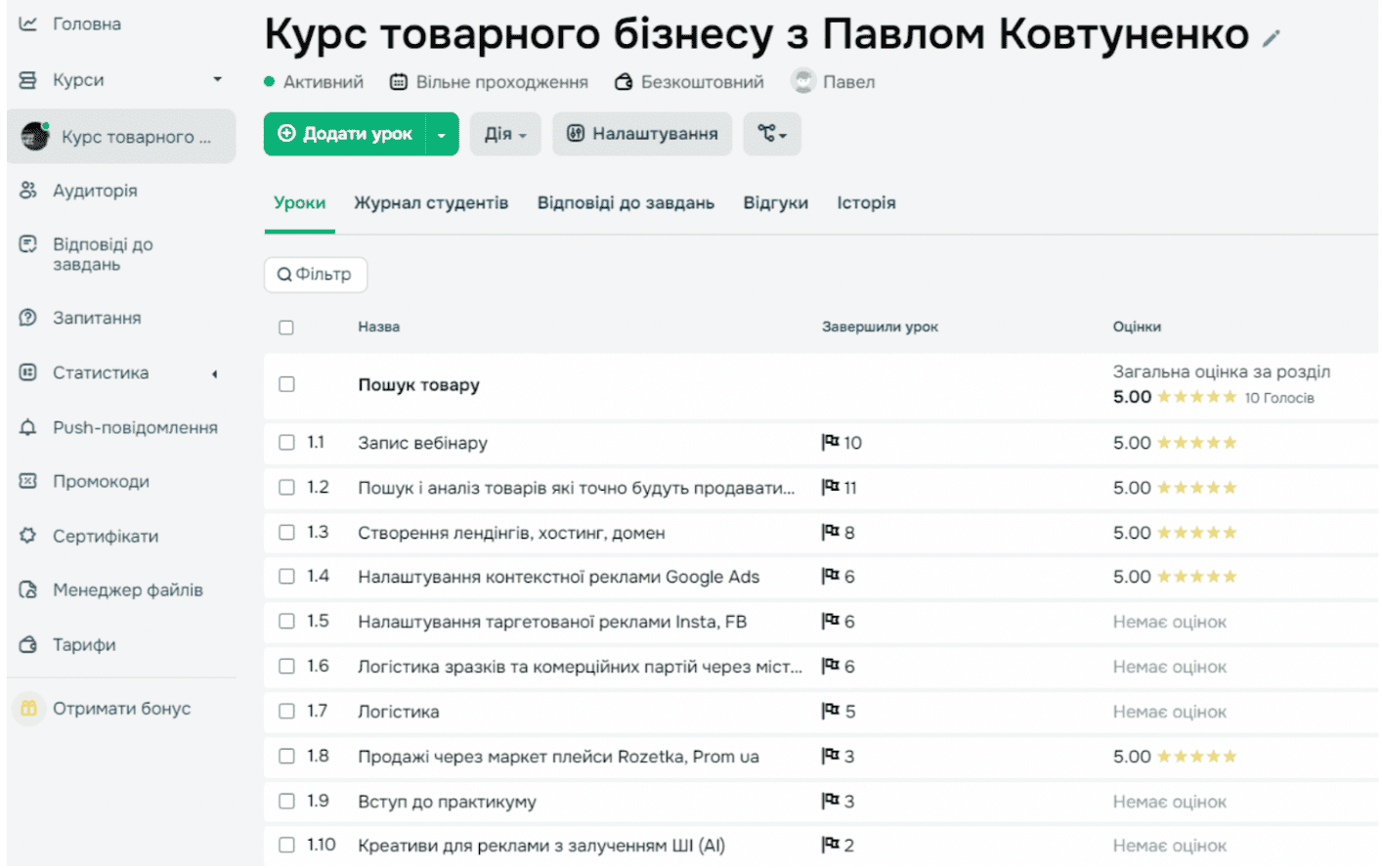
The platform contains 7 course modules with lessons, tests, and presentations. The system automatically opens access to the corresponding training package immediately after payment is confirmed.
9. End-to-end analytics (BI system)
To make management decisions, dashboards were created in Looker Studio based on Profit.Store BI. This allowed tracking the complete customer journey — from ad click to payment.
The business got the opportunity to analyze:
- conversions at each stage of the funnel;
- effectiveness of advertising channels;
- the impact of webinars on sales;
- traffic quality and user behavior.
Advantages:
- Drill down to the ad level. Marketers see the effectiveness of each creative and keyword.
- Attribution model. A data-driven approach allows you to understand the real contribution of each channel, not limited to just the "first" or "last" click.
- Financial indicators. ROAS, ROMI, CAC (customer acquisition cost), and total revenue are displayed in real time.
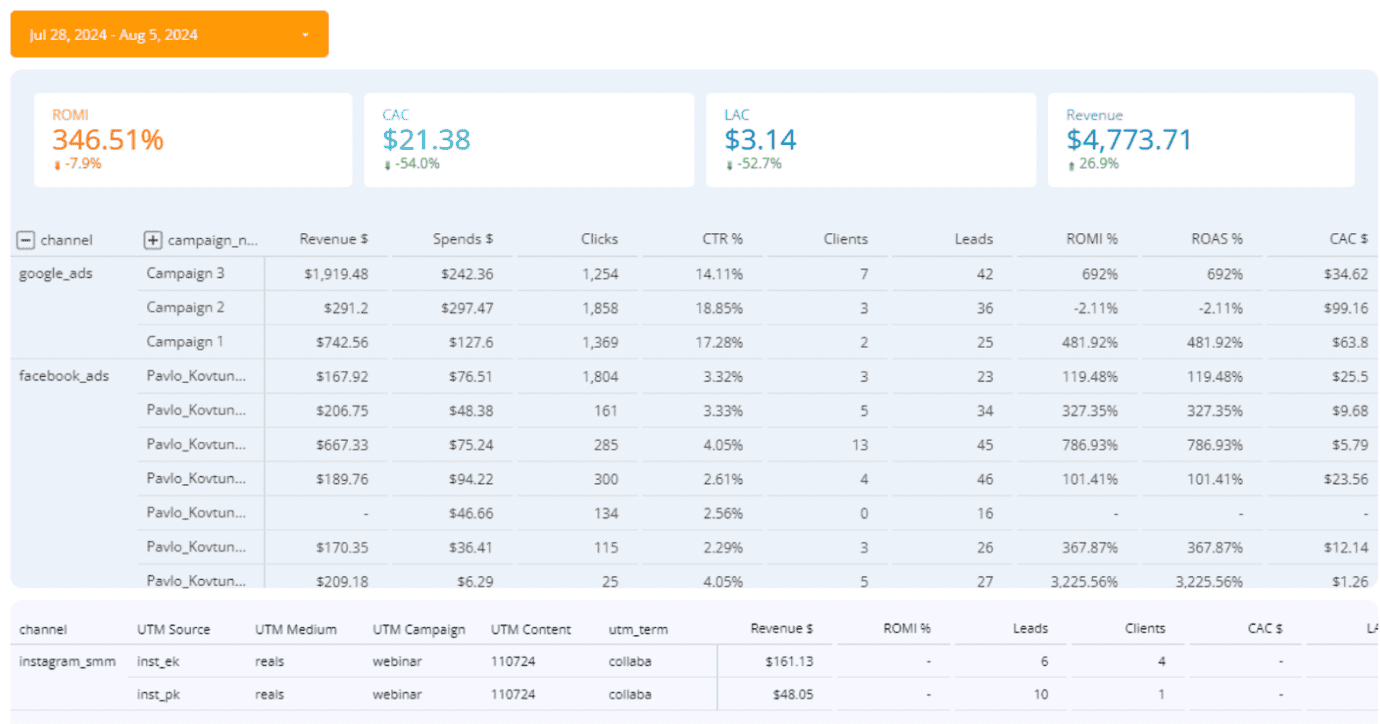 An interactive dashboard of end-to-end analytics on the effectiveness of advertising campaigns across the entire structure of advertising channels, with a hierarchy of accounts and UTM tags. A clear funnel of end-to-end indicators for each activity —email, targeting, context, chatbot, publication, or recommendation — everything will be detailed in the results.
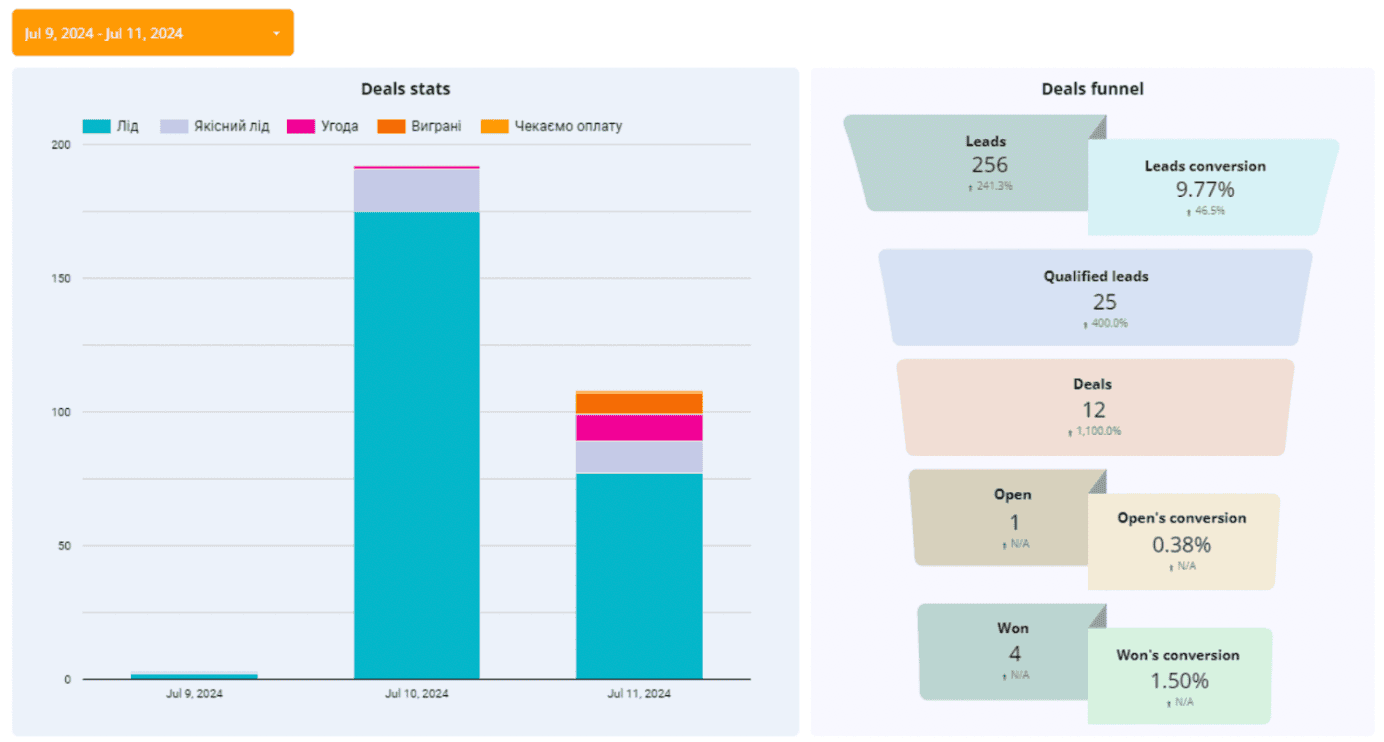 Interactive funnel dashboard with detailed conversion stages on the customer journey. You can explore the funnel from lead to payment by specific tripwire, lead magnet, product, or webinar. There is also the opportunity to view all deal statuses in a specific CRM sales funnel by product or object.
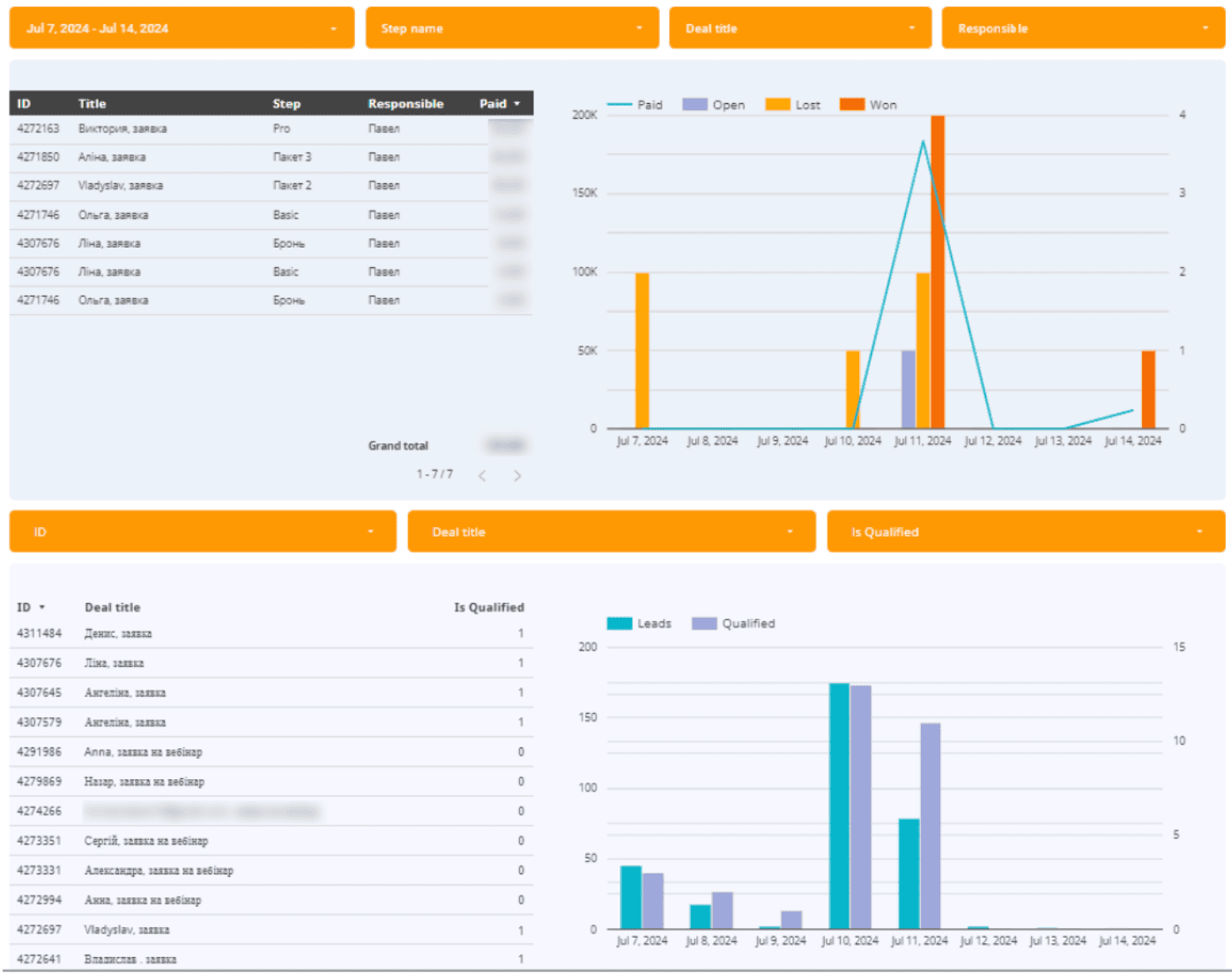 The funnel from advertising to payment with the CRM system deal statuses can be displayed in the context of a specific funnel object.
10. Event transmission via the CAPI server
Payment data from WayForPay is returned to Facebook Pixel and conversion in the Google Ads account as a "Purchase" with the exact amount of revenue, which allows Facebook and Google algorithms to optimize for finding the most paying audience.
11. "Brain" of the system (Node-RED)
Since standard integrations are often not enough for complex scenarios, the low-code solution Node-RED was used. The tool played a key role in the project and became the center of all logic, allowing:
- Receive data about webinar viewers after the webinar-end-trigger is triggered
- Automatically move cards and customers in CRM depending on their actions
- Manage the display of forms on the website (if the system identifies the user, they do not need to re-enter the data)
- Manage access in the LMS system
- Synchronize different systems with each other
- Ensure reliable data collection and transmission, which is the key to end-to-end analytics
Package purchase processing chain
 Below are small parts of the large automation funnel for a general picture of how it works.
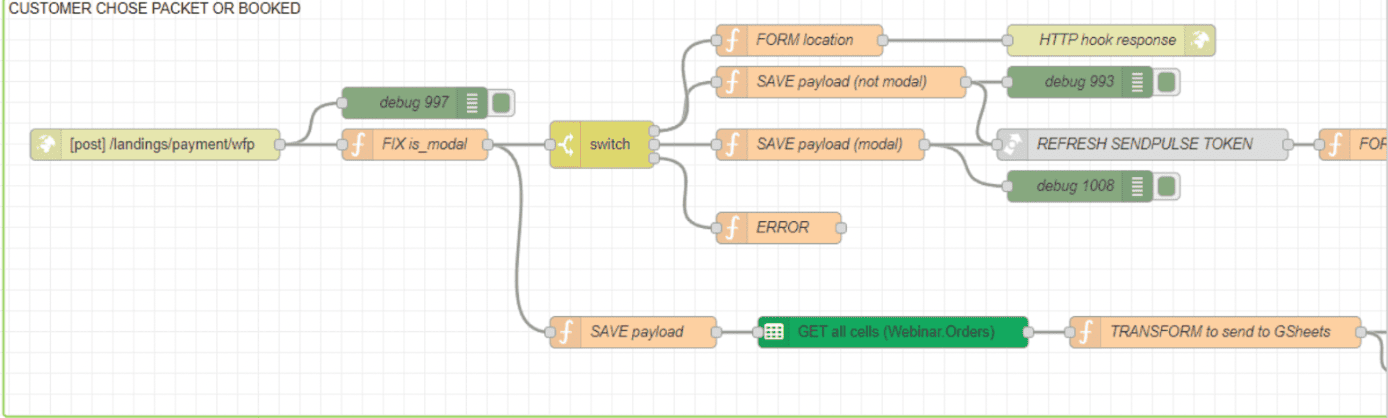 Processing input data, saving, and checking for correctness.
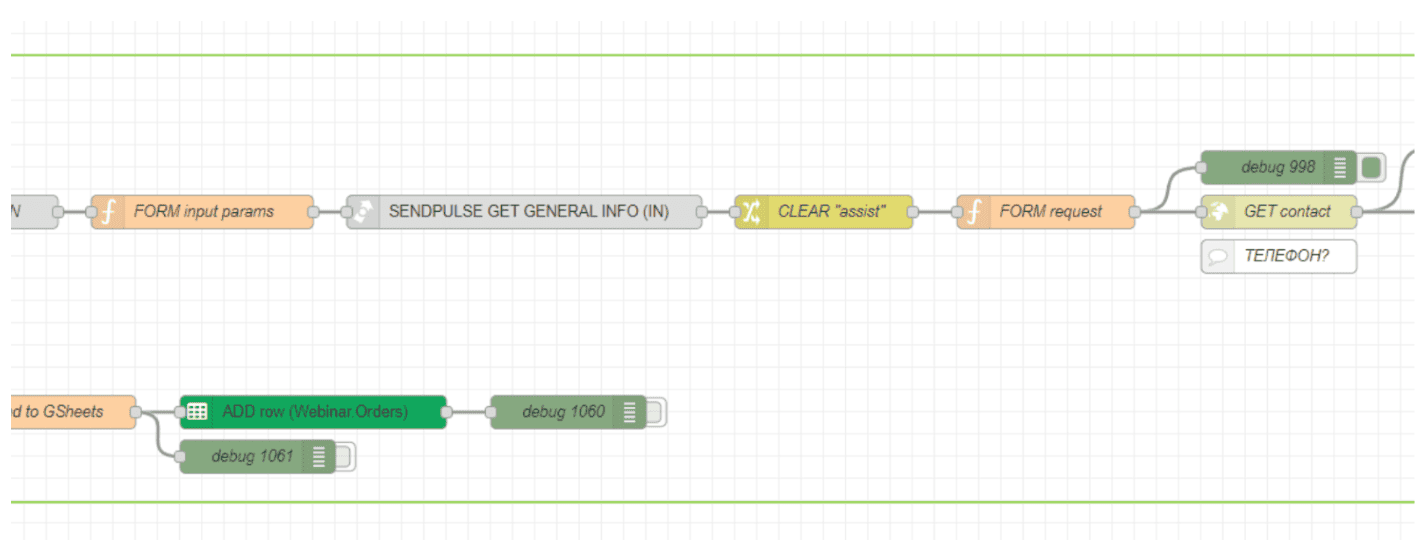 Obtaining general data on the SendPulse account for further inquiries. Searching for an existing contact in CRM.
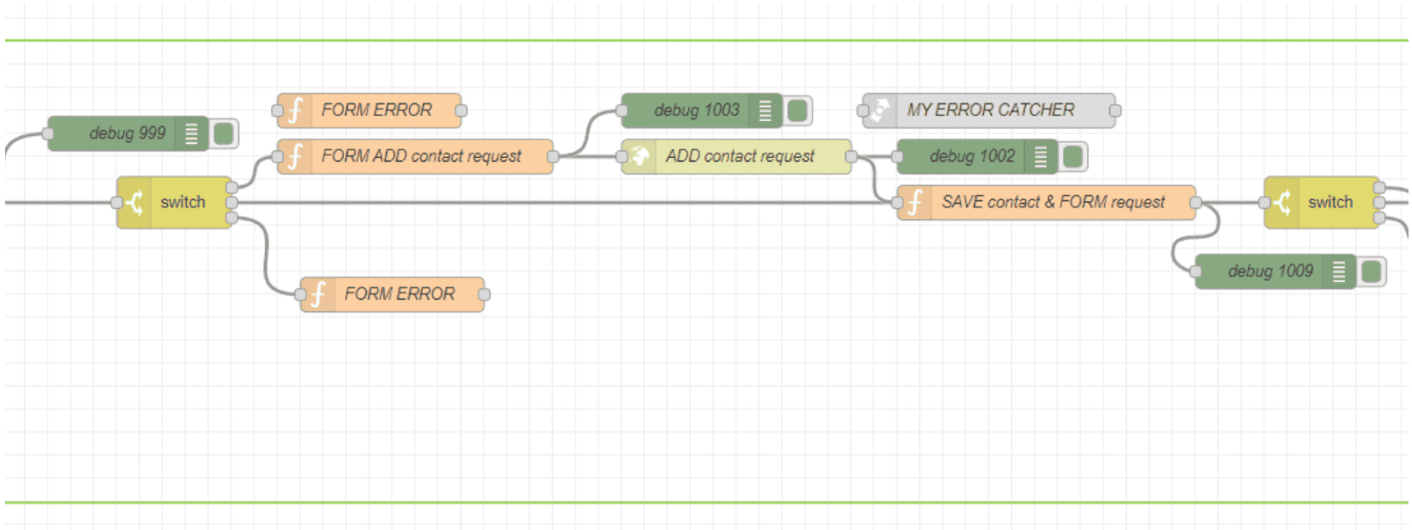 Get general SendPulse account data for further inquiries. Search for an existing contact in CRM.
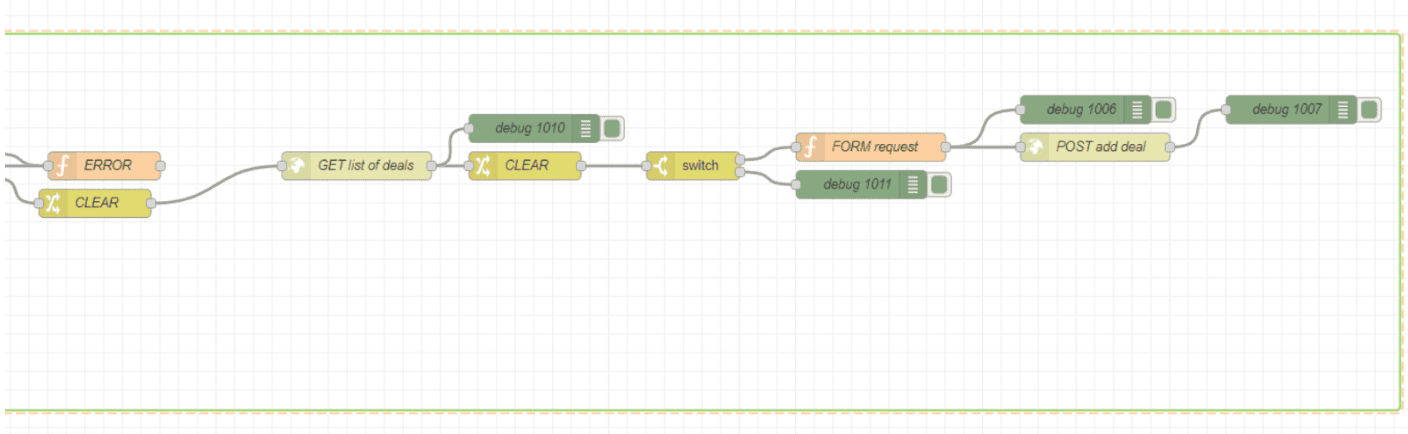 Create a new agreement for a course payment request if it does not already exist in CRM.
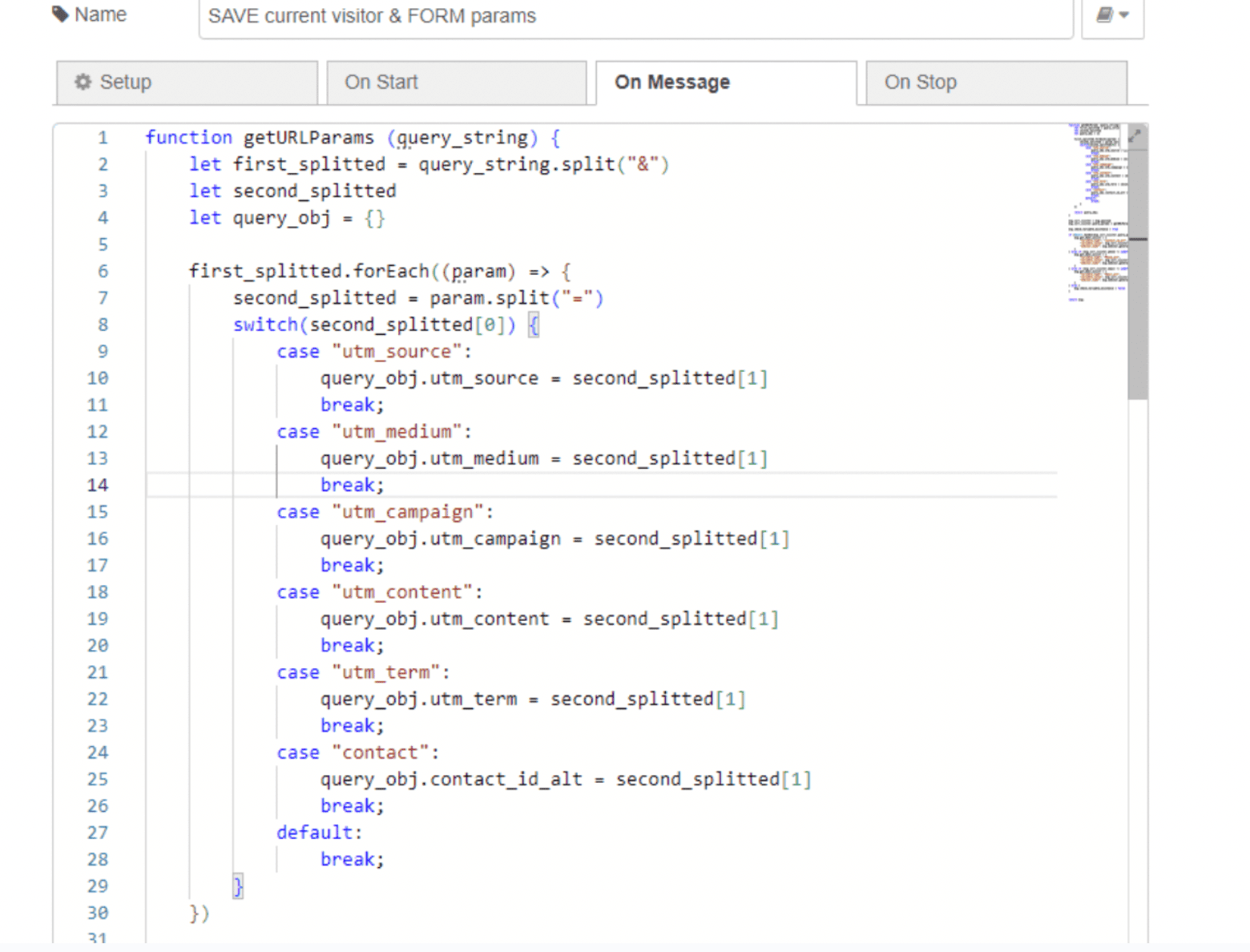
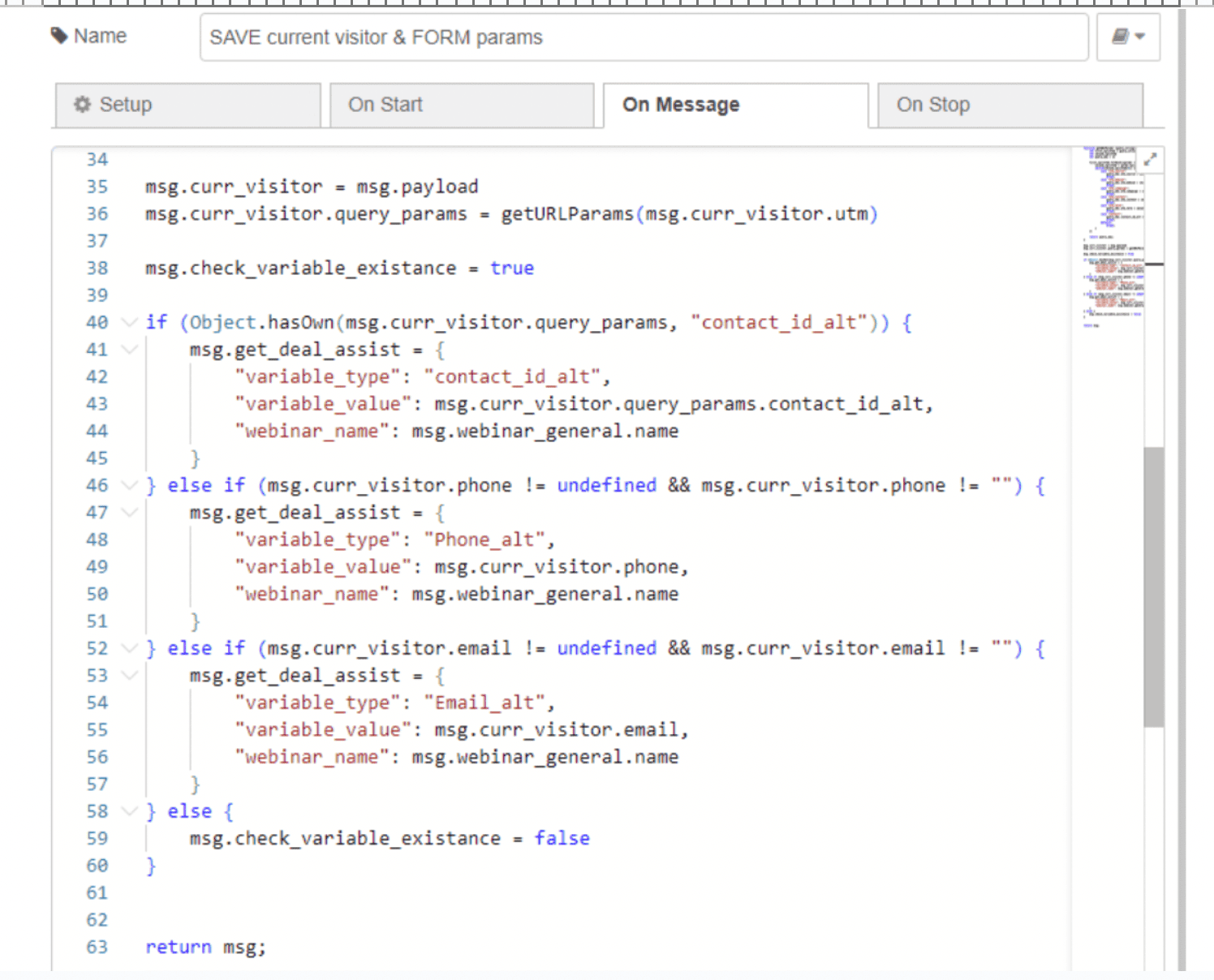 It contains the parsing of the URL sent by the webinar service and determines by which parameter to search for the deal in the CRM system.
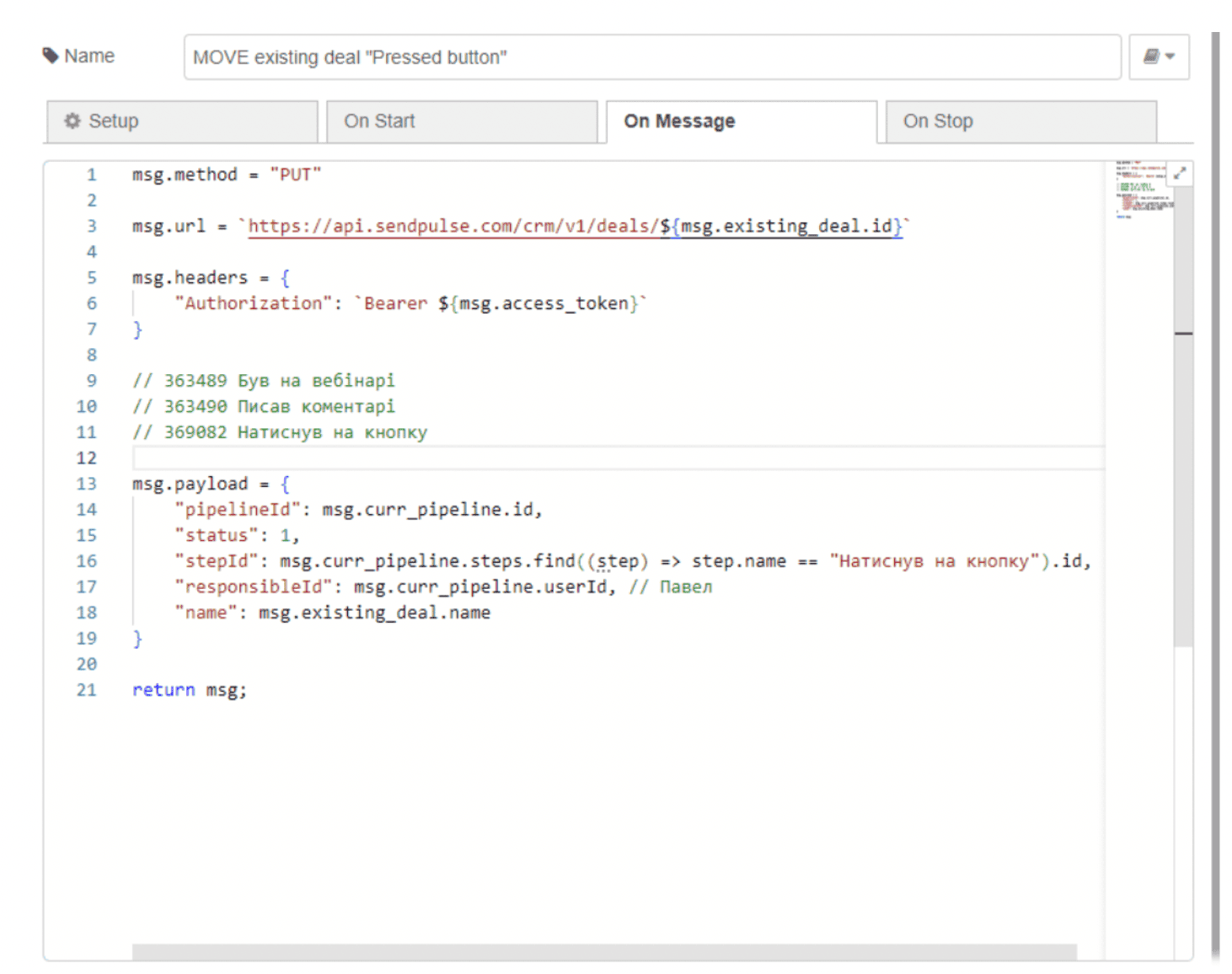 Forming a request to move a deal to the “Clicked the button” stage in the “Webinar” funnel.
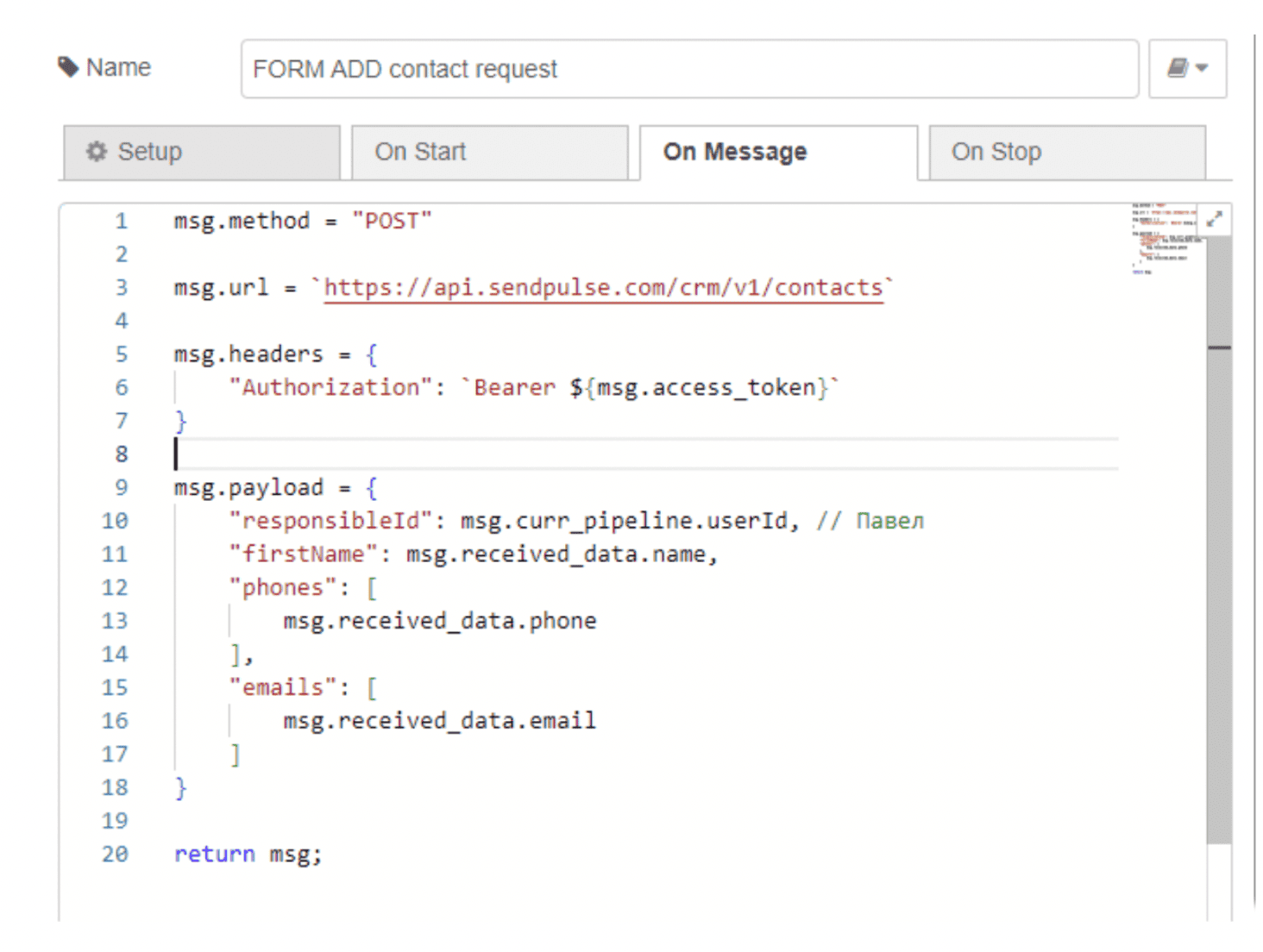 Forming a request to create a new "Contact" in CRM.
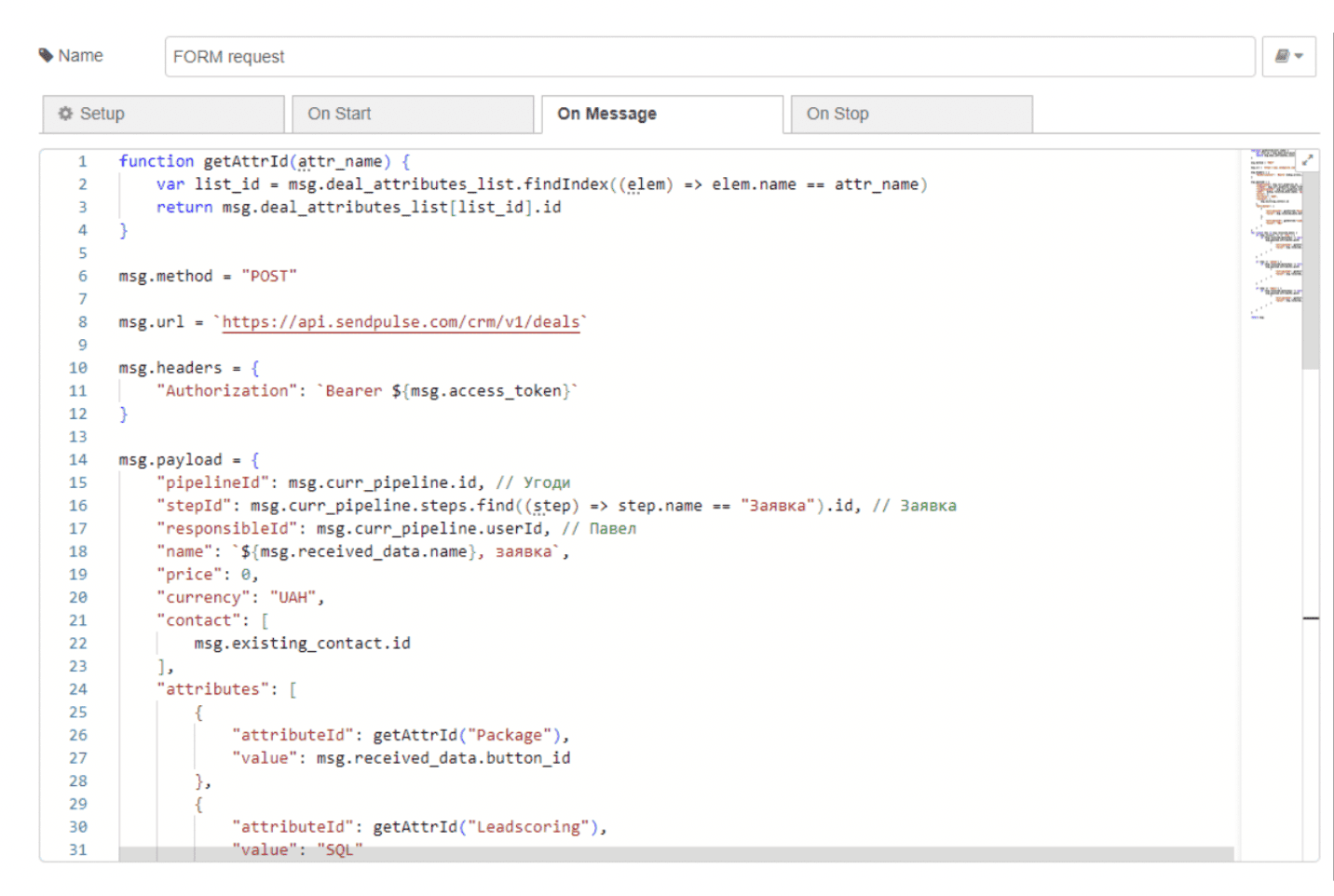 Node for generating a request to add an Agreement to the CRM system
The logic of the auto-funnel
The process is built as a continuous data transfer chain:
- Incoming traffic. Facebook advertising generates leads for an average price of $0.74. Each transition is accompanied by the transmission of UTM tags.
- Registration. The user lands on a landing page and selects a messenger via a widget. Node-RED captures their cookies and tags, creating a contact in the CRM.
- Webinar. During the webinar, the system identifies the user. If they click the "Book" button, the data is instantly updated in the CRM. In addition, the deal card displays all the viewer's comments in the chat and the history of button clicks. The webinar ID is also transmitted to accurately record which webinar the client came from.
- Payment. Through the WayForPay payment system, funds are credited, and the transaction status in SendPulse automatically changes to "Paid".
- Learning process. The user gets access to the LMS. To ensure that the client does not miss the email, the chatbot automatically sends a message: "Access already in the mail, have fun studying!"
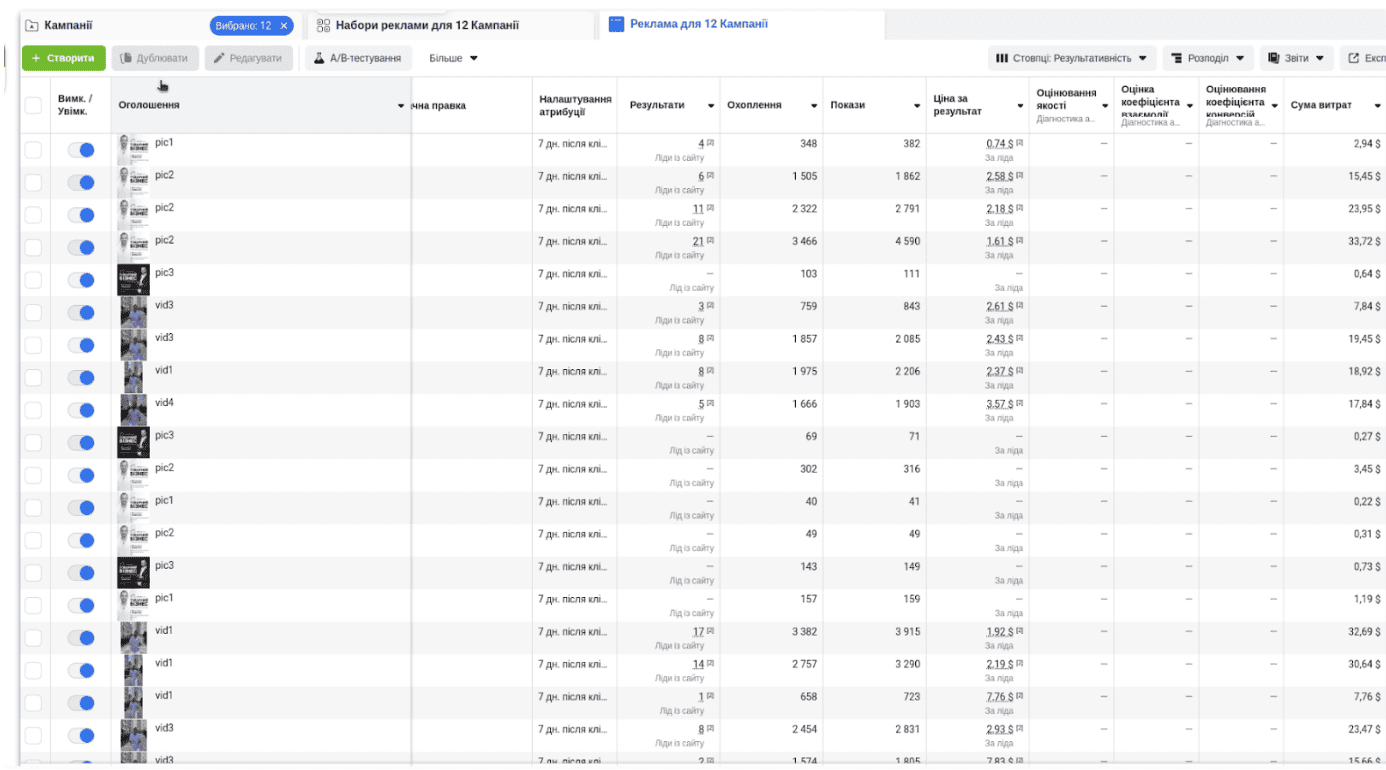 It is thanks to the availability of all the data that it is possible to build personalized marketing funnels and work with the relevant audience and, as a result, receive leads for $0.74.
Main challenges of the project
The biggest challenges were integrating a large number of tools and configuring complex logic through Node-RED. Also, significant attention was paid to testing the scenarios to eliminate errors at every stage.
These difficulties were completely overcome. As a result, the client received an autonomous system that does not require constant technical intervention.
Results and figures
The implementation of the system brought the following indicators: - Attribution of agreements. 100% of transactions are clearly tied to advertising channels. No more questions about "where the money comes from."
- Traffic marking. 98% of all traffic is successfully tracked (2% of losses are for users with maximum privacy settings).
- Attendance at the webinar. Thanks to the optimization of messages in bots, the indicator increased to 74%.
- Outflow control. The system records the percentage of bot blocking (for example, 18% at certain stages), which allows you to adjust the intensity of communication in a timely manner.
Conclusions for business
This case proves that automation is not just a convenience but a necessary foundation for scaling. Deep process detailing, thorough testing, and implementation of end-to-end analytics can minimize lead loss and significantly increase sales efficiency.
Key recommendations:
- Data priority. Ensure end-to-end parameter transfer across all services. If the chain is broken at even one point, analytics lose accuracy.
- Testing and optimization. It is impossible to create a perfect funnel right away. You need to constantly analyze the conversion at each intermediate stage and adjust the scenarios.
- Ecosystem selection. Choose tools with an open API that allow you to flexibly configure data exchange.
SHARE

OTHER ARTICLES BY THIS AUTHOR
Get the most exciting news first!
Expert articles, interviews with entrepreneurs and CEOs, research, analytics, and service reviews: be up to date with business and technology news and trends. Subscribe to the newsletter!
By clicking “Subscribe” you agree to Privacy Policy and consent using your contact data for newsletter purposes
OR FOLLOW ON: